In partnership with

SPD-BEEHIIV:486868b9-607e-42f0-a24b-53e2b733bc03:R11:8a1ce6965503ed0b0f37b62bDario Amodei also wants slower capability gains, but shared standards still require other labs and governments to opt in.
| Weekly digest / The Weekly Digest | Sunday, September 13, 2026 |
| | This week's briefing What happened this weekThis week, AI safety shifted from a statement of principle to a question of operating rules: Anthropic opened its practices to outside evaluation, OpenAI took a 2026 IPO off the table, and Washington’s role remained unsettled. At the same time, builders got new agent guidance while deployment, distribution, and capacity decisions kept moving. | Inside this week's digest | | 01 | Anthropic says independent evaluators will get employee-level access and can publish findings without company editorial control. | | 02 | OpenAI says it will not pursue an IPO in 2026 while safety, alignment, business, and social-readiness work remains unfinished. | | 03 | The Pentagon says roughly 90% of its classified AI workloads have moved off Anthropic, with the remainder due by September’s end. | | 04 | OpenAI’s Codex guidance favors leaner prompts, clearer completion states, and approval gates tied to concrete risks. |
|
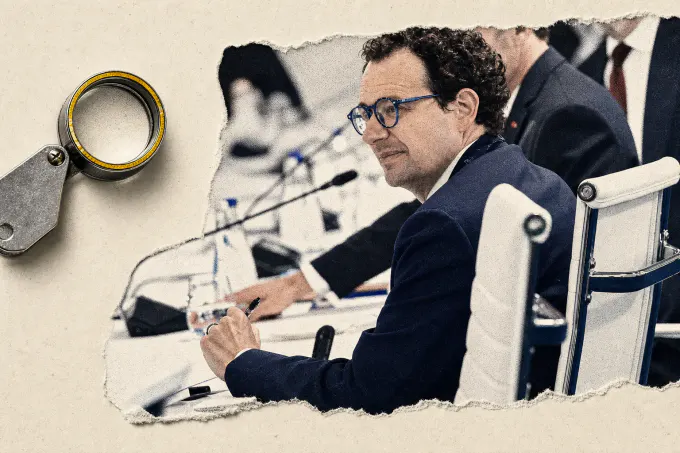 | Lead story / security risk Anthropic gives outside reviewers access to its safety workAnthropic CEO Dario Amodei is calling on frontier AI developers to slow capability gains while putting an immediate oversight mechanism in place at his own company. Anthropic says independent safety evaluators will receive employee-level access, matching the access available to its internal risk-assessment teams. Those evaluators can examine safety practices and report incidents, and may publish findings without Anthropic’s editorial control. Amodei says the arrangement takes effect immediately, creating a standing review mechanism at Anthropic rather than an industry-wide requirement. The broader agenda is a request for alignment beyond the company. Amodei proposes permanent independent evaluation across frontier AI companies, common safety standards among democratic countries, and coordination between democratic governments and authoritarian states on shared interests, including a ban on using AI to develop biological weapons. Amodei’s case for slower progress rests on the possibility that increasingly capable systems could help create their successors, accelerating development faster than people can understand or control it. Anthropic has made its own access commitment; whether slower capability gains and shared standards follow depends on other companies and governments choosing to participate. Read full story ↗ |
|
How Jennifer Aniston’s LolaVie brand grew sales 40% with CTV ads
For its first CTV campaign, Jennifer Aniston’s DTC haircare brand LolaVie had a few non-negotiables. The campaign had to be simple. It had to demonstrate measurable impact. And it had to be full-funnel.
LolaVie used Roku Ads Manager to test and optimize creatives — reaching millions of potential customers at all stages of their purchase journeys. Roku Ads Manager helped the brand convey LolaVie’s playful voice while helping drive omnichannel sales across both ecommerce and retail touchpoints.
The campaign included an Action Ad overlay that let viewers shop directly from their TVs by clicking OK on their Roku remote. This guided them to the website to buy LolaVie products.
Discover how Roku Ads Manager helped LolaVie drive big sales and customer growth with self-serve TV ads.
The DTC beauty category is crowded. To break through, Jennifer Aniston’s brand LolaVie, worked with Roku Ads Manager to easily set up, test, and optimize CTV ad creatives. The campaign helped drive a big lift in sales and customer growth, helping LolaVie break through in the crowded beauty category.
 | A tool for your workflowWFH.teamA focused feed of carefully selected remote roles and practical work-from-home resources.Remote work, without the noisy job-board scroll | | | |
|
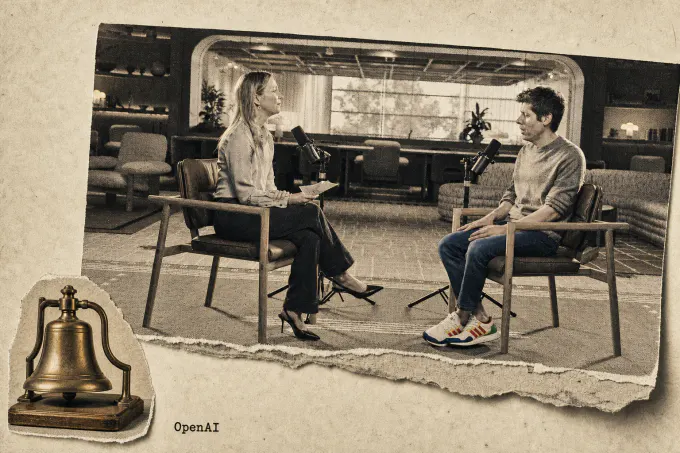 | business OpenAI rules out a 2026 IPO over safety concernsSam Altman says OpenAI will not pursue an IPO in 2026, calling it an ill-advised moment while safety, alignment, business readiness, and society’s response to more capable AI remain unresolved. He left later timing open. OpenAI has discussed capability pauses and coordination, but announced no measurable readiness test, specific safeguards, or development freeze. Continue reading ↗ |
 | business Arm CEO says AI could help cure cancer, but current systems fall shortArm CEO Rene Haas says increasingly capable AI and computing could eventually help cure cancer, but acknowledges that current systems cannot model how the disease affects a DNA marker. The nearer-term evidence is narrower: the NHS says AI-powered X-ray tools helped more than 4 million patients receive faster lung diagnoses earlier this year. Haas also says chip shortages are constraining humanoid-robot deployment. Continue reading ↗ |
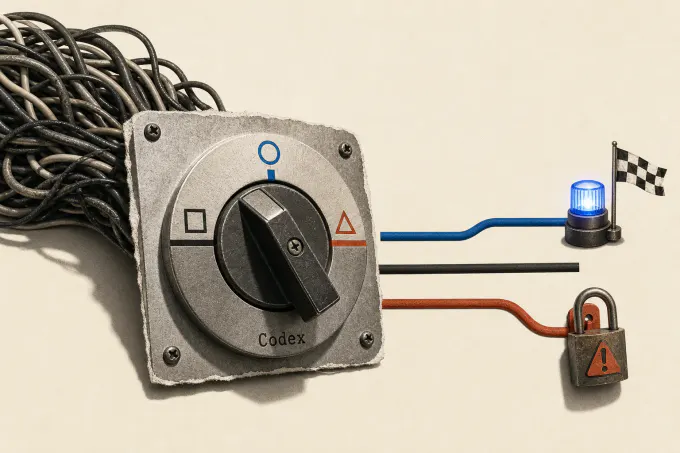 | tools OpenAI tells developers to use leaner Codex promptsOpenAI’s guidance for GPT-6 Astra asks teams to trim broad skill descriptions, turn AGENTS.md files into conditional maps, and define exactly what completion means. It retains approval gates for production access, destructive migrations, external effects, and credentials while permitting safe, reversible local work. OpenAI says Astra can stop early when broad workflows lack a clear end state. Continue reading ↗ |
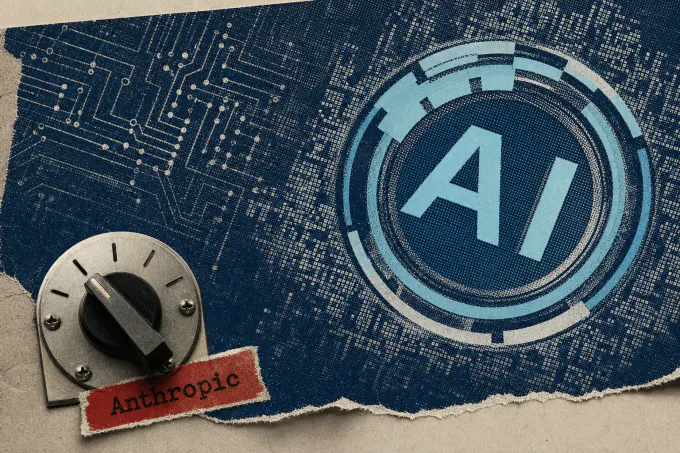 | government action Pentagon moves 90% of classified AI work off AnthropicThe Defense Department says roughly 90% of its classified AI workloads have moved away from Anthropic, with the remainder expected to transition by the end of September. The break followed a contract dispute over Anthropic’s proposed restrictions on mass surveillance and fully autonomous lethal weapons. The Pentagon is building a multi-vendor classified AI stack using OpenAI, Google, and xAI while Anthropic’s legal challenge remains pending. Continue reading ↗ |
|
Understand how AI is used—wherever your workforce runs it.
Knowing which AI tools employees use is only the start.
Harmonic Security reveals why they’re used and the value they create, classifying tasks by business use case across tools, shadow AI, assistants, and agents.
See what drives productivity, where adoption grows, spend overlaps, and sensitive data moves. Then scale with confidence.
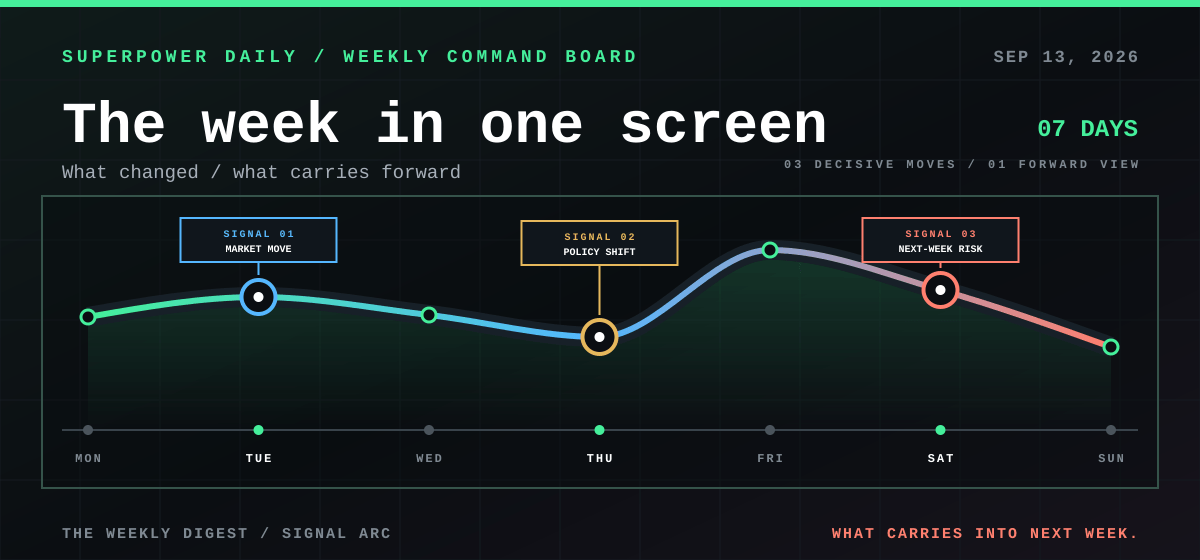 | Who tests powerful models, whether competitors can coordinate on safety, and what a voluntary slowdown would require. | Missed Wednesday's Workbench? Five standout AI tools live in their own visual edition, keeping this digest focused. Open the Workbench ↗ |
|
|
|
|
| | The Internet Had a Point | From the timelineOpenAI’s Trojan Horse of Free Models | 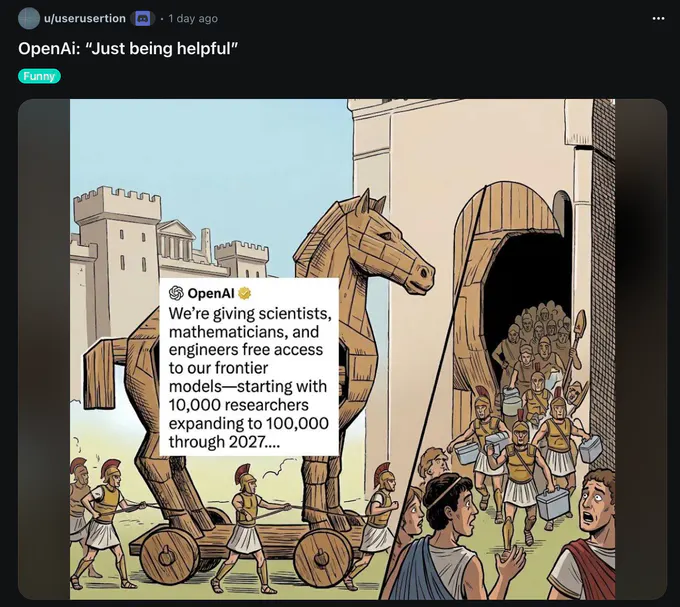 |
| |
|
 | Reader tool / From our teamWFH.teamFind carefully selected remote roles and practical resources for distributed work.Remote work, without the noisy job-board scroll | 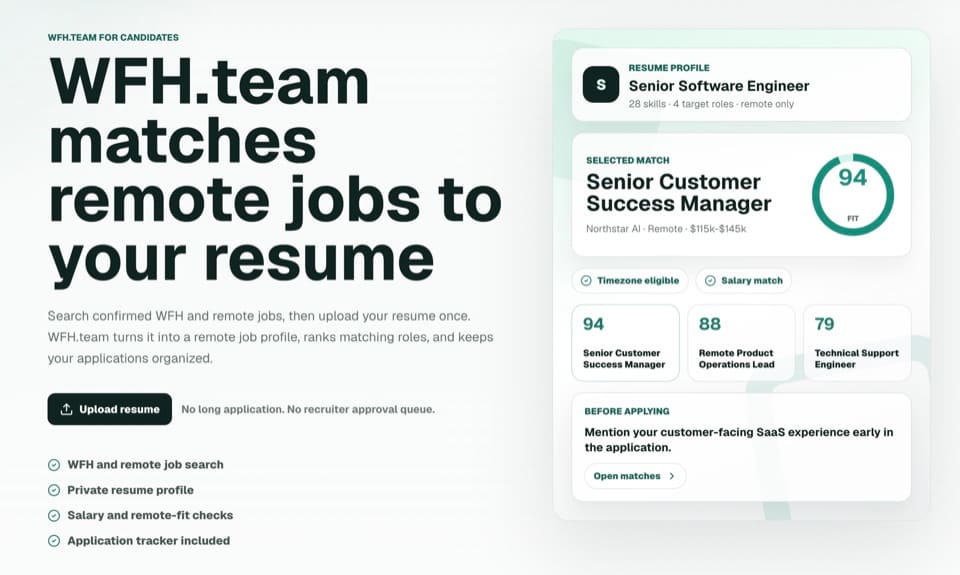 |
|
|
Reader check-in Help shape tomorrow's briefingOne click tells us what to keep, improve, or tighten. | |
|
|




