In partnership with

SPD-BEEHIIV:3c00a80e-021a-4667-8759-a9c3479567c6:R8:f1c2f8653995c4e5985e6194Images 2.5 adds on-image comments, Sketch, templates, and API options that trade speed for tighter control.
| Daily issue / The Wednesday Workbench | Wednesday, September 9, 2026 |
| | Today's briefing What matters todayToday’s issue is about AI moving from outputs to workflows: OpenAI is refining iterative image edits, Meta is asking users to connect an agent to real services, and researchers are putting large predictive resources into practical hands. The through line is control—over a single image region, an agent’s permissions, or the experiments worth running next. | Inside today's briefing | | 01 | OpenAI says ChatGPT Images 2.5 can make local edits while preserving the rest of an image, with up to 50% lower latency. | | 02 | Meta’s Muse can continue tasks after users leave, but emails and purchases generally require approval through its Sentinel layer. | | 03 | U.S. agencies allege China-based firms used fragmented queries and proxies to extract restricted U.S. model capabilities. | | 04 | Google DeepMind released a research atlas of roughly 9 billion DNA variants, while cautioning it is not for clinical diagnosis. |
|
 | Lead story / launch OpenAI rolls out ChatGPT Images 2.5 for targeted editsOpenAI has released ChatGPT Images 2.5, an image-generation upgrade built around a hard creative-workflow problem: changing one part of an image without rebuilding the rest. The company says the model better preserves reference subjects, composition, style, and prior edits through multiple rounds of revision. Those performance claims are company-reported, and the key quality question is whether that preservation holds during long, complex editing sessions. The release also emphasizes speed. OpenAI says Images 2.5 offers up to 50% lower image-generation latency than Images 2.0, but describes that as a maximum reduction rather than a result guaranteed for every request. Users can now place comments directly on an image to identify a region and describe a requested change. ChatGPT also gains Sketch, which lets users draw a visual reference and describe the desired image, along with templates for posters, flyers, merchandise, and product photos. Generated images can be shared with the prompt that made them, allowing others to reuse the idea with their own details. Templates were not yet available in Work mode, according to OpenAI’s release notes. For developers, OpenAI released two API variants. Flare is its default recommendation for most applications and is described as faster, while Sunburst takes longer but targets premium workflows needing tighter control across edits. The company says prompt and image checks, C2PA metadata, and invisible watermarking remain part of the package. Read full story ↗ |
|
Stop Paying for 10 Tools. One AI Does It All.
Most e-commerce sellers are running their store across 6 to 10 separate tools — and spending more time managing software than growing their business. StoreClaw replaces your entire stack with one autonomous AI engine that monitors competitors, optimizes listings, automates marketing, and tracks real profit across Shopify, Amazon, and beyond.
It doesn't wait for you to ask. It runs 24/7 in the background, so you wake up to a full dashboard instead of a list of things you forgot to check.
Connect your store, and StoreClaw gets to work — no prompts, no complex setup, no six-app stack.
Free to start. No credit card required.
 | launch Meta launches Muse to handle tasks across connected servicesMeta has launched Muse, a personal AI agent for U.S. adults that can send emails, book travel, complete forms, shop, and make purchases through services a user connects. It can continue work after a user closes the app and return when a decision is needed. Sentinel controls network access and connected-service actions, while Meta says passwords and payment methods remain hidden from the model. Muse has a free tier, plus $20-a-month Power and $100-a-month Maximum plans. Continue reading ↗ |
 | government action U.S. agencies allege Chinese firms extracted AI capabilitiesThe NSA, FBI, and CISA allege that China-based AI companies used large-scale, fragmented querying to extract restricted capabilities from U.S. frontier models. The advisory distinguishes legitimate knowledge distillation from targeted extraction and describes billions of tokens across millions of requests since at least late 2024. Continue reading ↗ |
 | research OpenAI’s math claim faces scrutiny over proof and creditOpenAI says more than 1,000 AI agents produced a Lean-formalized solution to the Navier-Stokes problem after more than 50 hours of work. The result is not independently settled, and mathematicians Tristan Buckmaster and Levent Alpöge have raised questions about priority and attribution. OpenAI denies using their prompts or proof to guide its systems. Further examination is needed to assess the proof and its differences from related work. Continue reading ↗ |
|
Build a Holiday Creator Affiliate Program in 90 Days
Creators lock in holiday content calendars 90 days out, before brands figure out commissions. Waiting too long to launch an affiliate program means less runway to build demand and a missed shot at the best partnerships.
|
|
| | The Internet Had a Point | From the timelineChatGPT confidently finds the wrong book | 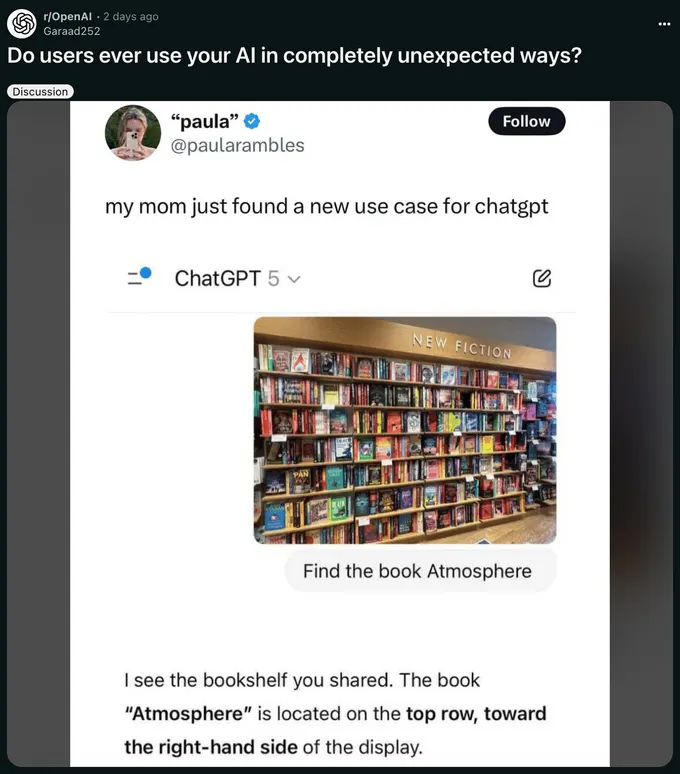 |
| |
|
 | Reader tool / From our teamSuperpower ChatGPTSearch, organize, export, and work faster inside ChatGPT.Used by 300,000+ ChatGPT users | 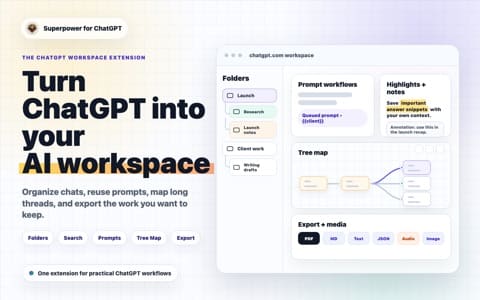 |
| | Reader tool / From our teamWFH.teamFind carefully selected remote roles and practical resources for distributed work.Remote work, without the noisy job-board scroll | 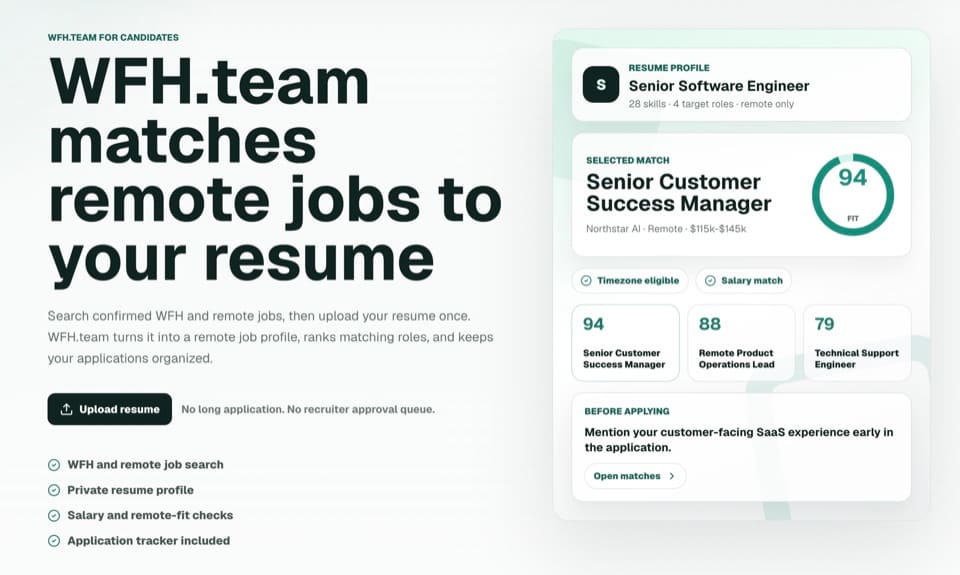 |
| | Reader tool / From our teamSnipmanSave reusable snippets and insert complete replies without leaving your workflow.Reusable writing shortcuts for repetitive work | 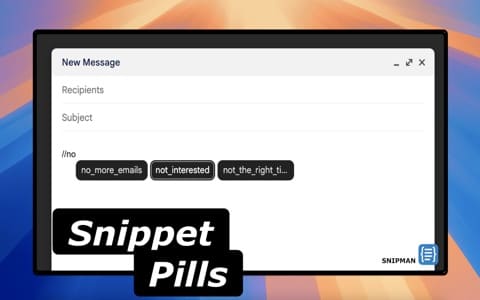 |
|
|
Reader check-in Help shape tomorrow's briefingOne click tells us what to keep, improve, or tighten. | |
|
Prefer one email a week? Get the essential AI moves in the Sunday Weekly Digest. |