| Daily issue / The Internet Edition | Friday, September 25, 2026 |
| | Our toolsSuperpower ChatGPT/WFH.team/Snipman | Today's briefing What matters todayLonger videos, crisis-text alerts and agents that can act across services are pushing AI beyond a single clever answer. The dividing line today is evidence: Google's video systems remain research, MIT's tool needs clinical validation, and Meta's proposed purchase fees are not yet revenue. | Inside today's briefing | | 01 | Google's ten-minute AI film demonstrates connected segments, but it does not test all four of the company's video systems. | | 02 | MIT's crisis-text tool highlights words linked to assessed suicide risk, not evidence that it can predict future attempts. | | 03 | Meta has priced Muse at $20 and $100 per month, while fees on purchases it completes remain a future plan. | | 04 | Waymo reports 82% fewer injury crashes than a local human-driver benchmark over 271.3 million rider-only miles. |
|  | Lead story / research Google tests four ways to keep longer AI videos consistentGoogle Research has outlined four related systems aimed at a problem that short AI-generated clips can hide: characters, clothing and settings changing between shots. Mistakes in an early asset can also carry through later production steps. The work coordinates existing models, including Gemini and Veo, rather than introducing a new video generator. One system acts as a co-director. Starting from a human creative specification, it plans a story and visual style, directs agents making storyboards, shots and audio, then has a model assess the assembled cut before another production loop. Another system, CANVAS, stores references for characters, places and objects so a story can return to them instead of relying on a fresh description. A third system, A²RD, generates video in connected segments. It stores context from earlier segments and can either move the action to a new story beat or anchor a scene to people and places already shown. Google's ten-minute film demonstrates this segment-based approach. It does not test how all four systems perform together. The fourth system, VQQA, uses answers to targeted visual questions to revise a prompt and generate another candidate; it does not repair faulty frames directly. Google reports gains in consistency and character persistence, but provides no figures in the supplied account. These remain research systems, and the examples do not establish how reliably they will hold longer stories together. Read full story ↗ |
| Bot fatigue anyone? |  | Most AI tools hand you an agent and an empty chat box, then call that automation. It isn't. Bolter starts you from a blueprint: a process built and tested by an operator like you. Install it with one click and your agents will run the workflow end-to-end, providing receipts on every step. Built by Improbable on a decade of experience in large-scale infrastructure. Get free access |
|  | research MIT builds a crisis-text tool that shows words behind suicide-risk estimatesMIT researchers built a lightweight tool that highlights the words contributing to suicide-risk estimates in crisis conversations. Tested on about 16,000 de-identified Crisis Text Line exchanges, it distinguished counselor-assessed risk categories using a clinician-reviewed list covering 49 risk factors. That does not show it can predict attempts or improve interventions. The team is sharing the software and word list, but says clinical use requires further validation. Continue reading ↗ |
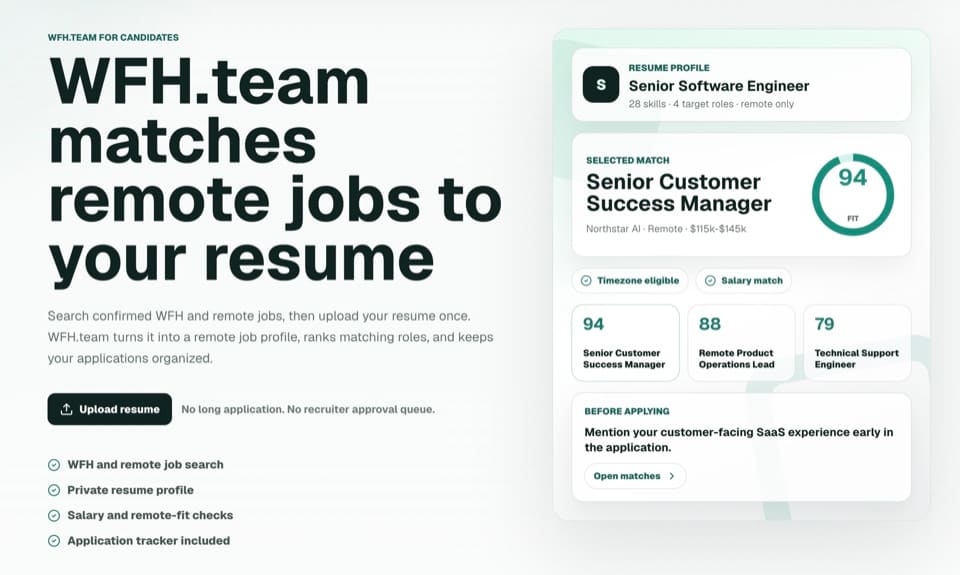
|  | A tool for your workflowWFH.team | | A focused feed of carefully selected remote roles and practical work-from-home resources. | |
| 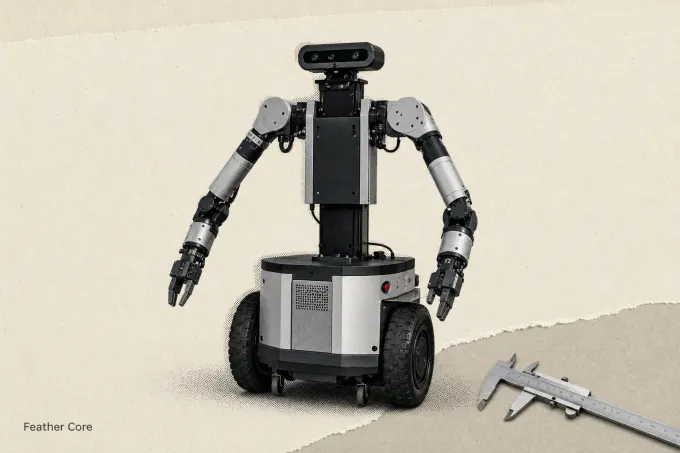 | startups Feather starts selling robots that let developers choose the AIFeather Robotics has begun selling small quantities of configurable robots and says revenue has passed $1 million. Its roughly $30,000 platform can run AI from outside providers, leaving customers to select models and build applications for particular jobs. Feather says robots are cooking in Japanese restaurants and cleaning labs, but has not named customers or disclosed deployment counts. Sales show early demand, not dependable performance across those jobs. Continue reading ↗ |
|  | launch Meta sets Muse prices at $20 and $100 a monthMeta has priced its Muse agent's Power and Maximum plans at $20 and $100 per month, though it has not explained what separates them. Zuckerberg also described a possible fee on purchases Muse completes; that remains a future plan, not current revenue. New retailer and Spotify connections could give the agent more tasks, but users would need to grant account access. Whether those connections lead to paid use remains to be seen. Continue reading ↗ |
|
|