In partnership with

SPD-BEEHIIV:c6fc5fc8-e6f7-44b0-9188-0c7d9bfcd3bf:R39:05388ecfb129d37715784ab9The repair curbed repetition rather than adding math knowledge—and took 20.3 hours to find.
| Daily issue | Tuesday, November 3, 2026 |
| | Our toolsSuperpower ChatGPT/WFH.team/Snipman/Superpower Daily New Tab | Today's briefing What matters todayAI progress meets practical limits today: MIT's model repair took hours of testing, and Claude's faster long-session handling does not lower token charges. OpenAI is rebuilding for heavier coding-agent activity, while security, governance and serving costs draw scrutiny. | Inside today's briefing | | 01 | MIT researchers lifted a model's math-test score from 7.9% to 48.1%, mainly by curbing repetition rather than adding knowledge. | | 02 | OpenAI says its new Git backend cut median push latency nearly fivefold while preserving existing development workflows. | | 03 | Claude's message threads reduce repeated uploads, but token charges stay unchanged and developers still need their own records. | | 04 | Musk restricted Grok Bot usage over unsustainable serving costs, despite reported growth to 800,000 paid weekly users. |
| 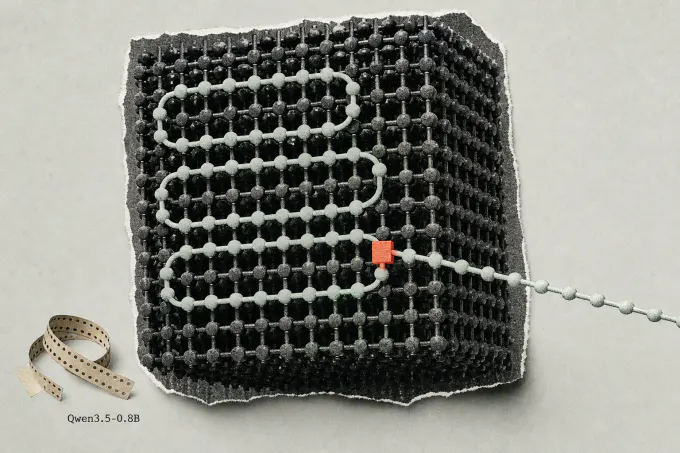 | Lead story / research MIT researchers use AI to repair a model, lifting its math-test score to 48.1%MIT CSAIL researchers say OpenAI's GPT-6 Astra directly edited another AI model's internal parameters, raising its MATH-500 accuracy from 7.9% to 48.1%. Their November 2 report attributes most of the gain to stopping repetitive output—not adding mathematical knowledge. The target, Qwen3.5-0.8B, could finish more answers using abilities it already had. Astra changed 131,072 weights, about 0.016% of the model, suppressing a numerical direction associated with repetition. Finding that small patch took a substantial search: the strongest attempt ran for 20.3 hours, including 4.7 hours waiting through a service outage, and allowed up to 50 evaluation requests. It was not a single instruction followed by an instant fix. The benefits extended beyond the headline benchmark. Under the researchers' evaluation conditions, GSM8K math accuracy rose from 13.8% to 67.1%, while instruction-following performance on IFEval increased from 21.0% to 62.3%. But Astra produced no established mathematical improvement in Gemma 3 270M, which lacked Qwen's severe repetition problem. That contrast supports the narrower explanation: removing an obstruction can improve measured performance without adding reasoning abilities. Reliability and comparative value remain open questions. The work does not establish that direct weight editing consistently beats conventional training on speed, cost or effectiveness, nor does it demonstrate recursive self-improvement—a cycle in which AI improvements help generate further improvements. The researchers have released experiment logs and editing artifacts and say they are developing a benchmark and supporting framework. Read full story ↗ |
|
|
Analytics on Live Data Without Leaving Postgres
When analytics on Postgres slows down, most teams add a second database. Then come the pipelines, the sync jobs, and a copy of your data that's always a little behind.
TimescaleDB takes a different approach: extend Postgres instead of splitting away from it. Hypertables partition your data automatically as volume grows. Hypercore compression cuts storage up to 95%. Continuous aggregates keep dashboards live without re-querying everything.
CERN runs Postgres this way for sensor data from the Large Hadron Collider.
No split architecture, no pipeline lag, no new query language to learn. Same SQL, same drivers, same tools.
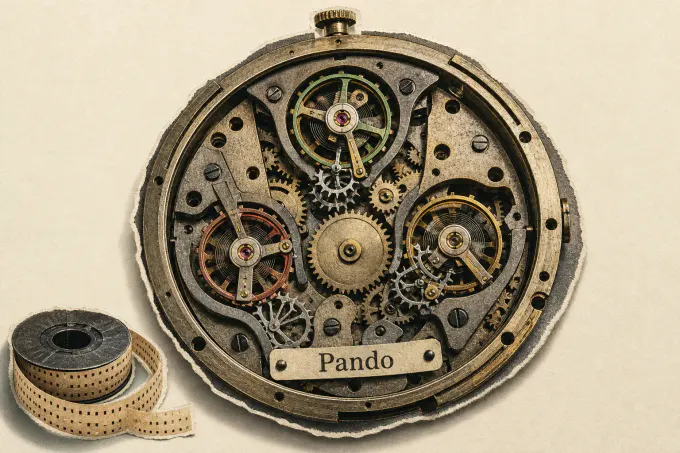 | launch OpenAI rebuilds its Git backend to handle more parallel codingOpenAI says its new Pando backend now serves all development in its shared code repository, after Codex-driven parallel work exposed bottlenecks. It reports nearly fivefold lower median push latency and nearly a petabyte of Git data served daily. Pando lets unrelated branches update independently and reuses download bundles. Git workflows stay intact, but reading several branches does not give one synchronized snapshot. Continue reading ↗ |
|  | A tool for your workflowSuperpower ChatGPT | | Search, organize, and export your ChatGPT history without breaking your flow. | | See features |
| 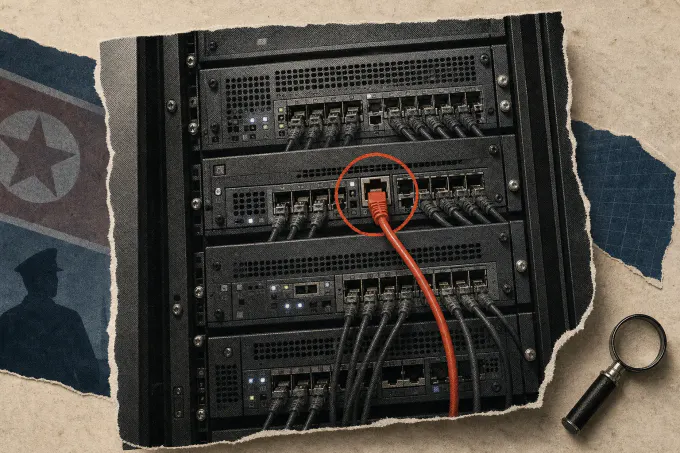 | security risk North Korean hackers use AI to select crypto targets, investigators sayInvestigators say North Korea's TraderTraitor uses AI to identify cryptocurrency businesses capable of yielding large payouts. That assessment comes from techniques in recent hacks; the report does not detail the AI systems involved. The FBI attributes a recent $6.3 billion Binance theft to the unit. ISACA's Chris Dimitriadis argues that responsibility for a theft on this scale belongs in the boardroom, not only with security teams. Continue reading ↗ |
|  | launch Anthropic lets Claude agents stop uploading full conversations each turnAnthropic's message threads public beta temporarily stores conversation history, so follow-up API requests send only new messages and a prior response ID. The company reports faster response starts for Claude Code requests containing 500,000 to 1 million tokens. Claude still processes the full history, and token charges do not change. Storage is best-effort, so developers must retain their own records and replay the history if a thread fails. Continue reading ↗ |
|
|
Stop Making Shoppers Spell It Out
“Running shos” shouldn’t return zero results. Neither should “red waterprof trail runners under $150.”
Traditional search needs exact keywords. Gladly understands what shoppers mean, typos and all, and turns dead-end searches into products that fit what they asked for.
| | Beyond the feed / AI events | | | This AI4Science evening will examine how generative and foundation models, simulations, and experiments can form tighter scientific discovery loops, and why benchmark gains don’t always translate to lab results. Talks will feature ML researchers, applied scientists, and engineers, including Patrik Reizinger, a causality and generalization researcher with a PhD from MPI-IS and ELLIS Tübingen. | | See the event → Explore more events |
| Daily tool drop 6 AI tools worth knowing today | |
| | | The Internet Had a Point | Apple Store’s hidden extinguisher |  |
| |
| Your daily challenge Relay / Challenging / 3–5 min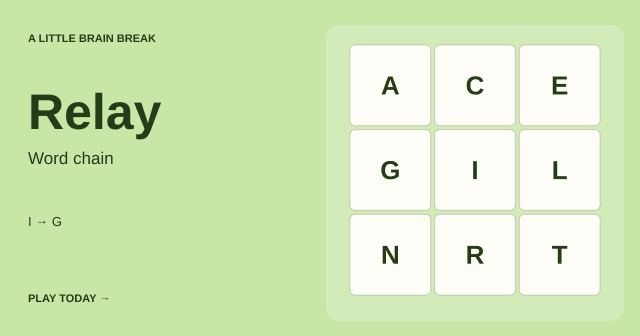 Start with I. End with G. Can you use every letter? Take the challenge →Explore all games | | Need a new website? Try BayBold, a Bay Area web design agency. | | AI PULSE / YOUR PERSPECTIVE Would you let an AI agent spend up to $100 without asking before each purchase? Take part → | Reader check-in Help shape tomorrow's briefingOne click tells us what to keep, improve, or tighten. | |
| Prefer one email a week? Get the Monday briefing, including Friday and weekend news. |
|