Sponsored by

SPD-BEEHIIV:81714b7f-2938-494b-a9ce-253f0d6431f3:R8:ba77b29a45feb836a7dae43dHarvey and Legora can build on Astra for Law, while planned software integrations are not yet live.
| Daily issue / The Internet Edition | Friday, September 18, 2026 |
| | Our toolsSuperpower ChatGPT/WFH.team/Snipman | Today's briefing What matters todayToday’s releases move AI deeper into professional workflows, from OpenAI’s legal platform and Anthropic’s cloud coding projects to Mapbox’s location-aware tools. At the same time, researchers and companies surfaced the limits: costly agent fleets, security exposure, and a rare training failure. | Inside today's briefing | | 01 | OpenAI’s Astra for Law pairs GPT-6 Astra with U.S. legal materials, but access initially goes only to selected firms. | | 02 | Anthropic’s Claude Code beta can delegate work across isolated cloud sessions, though developers still resolve merge conflicts. | | 03 | Google researchers report up to 162 times fewer discovery-agent calls by replaying past searches, not identical runtime tests. | | 04 | Mapbox’s Traffic 2.0 is live, while its Places API and natural-language queries remain in public preview. |
|
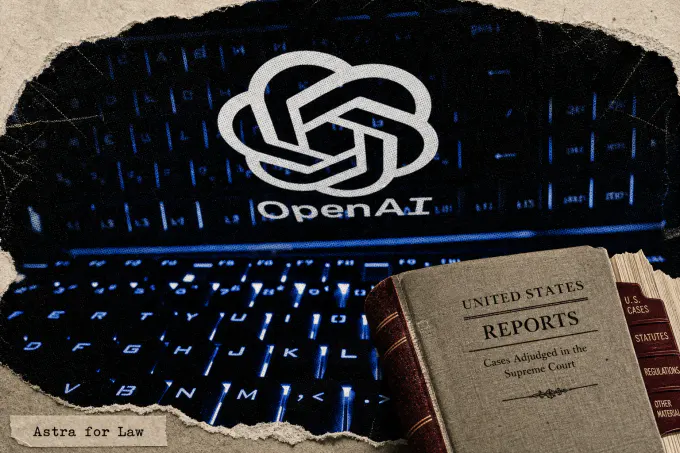 | Lead story / launch OpenAI launches a legal AI platform for selected firmsOpenAI has launched Astra for Law, a platform for legal research, drafting advice, and custom legal applications. The initial rollout is limited to selected law firms, with OpenAI citing protections for confidential client work. The platform is built on GPT-6 Astra and paired with an index of U.S. case law, statutes, regulations, and other legal materials. It also includes specialized instructions for legal analysis and writing. OpenAI describes research and drafting as intended uses, rather than independently verified performance results. OpenAI said Harvey and Legora can build legal products on Astra for Law. It also expects integrations with Relativity, Clio, Intapp, and Thomson Reuters, though those connections have been announced as planned rather than demonstrated as live. Sullivan & Cromwell, Ropes & Gray, Cooley, Latham & Watkins, and Wachtell Lipton helped test and develop applications. The launch brings legal source material, selected-firm access, and a prospective software ecosystem into one product, while the eventual deployment scope remains unclear. Read full story ↗ |
|
Build. Break. Fix. Learn.
KodeKloud gives you 1,280+ hands-on labs where you provision Kubernetes clusters, write Terraform configs, build CI/CD pipelines, configure Linux systems, containerize apps with Docker, automate with Ansible, and manage Git workflows.
78+ playgrounds let you experiment freely in sandbox AWS environments, Kubernetes clusters, and CI/CD systems without risk.
190+ courses across DevOps, Cloud, and AI pair theory with hands-on labs at every step.
KodeKloud Engineer and 100 Day Challenges provide real-world job scenarios with automated grading that confirms your solutions work.
Stuck? The 55,000+ member Discord community connects you with peers and instructors ready to help.
Every lab runs in a live environment. You deploy, you troubleshoot, you learn. No videos without context. No simulations. The kind of practice that actually builds confidence because you've done real work, not watched someone else do it.
 | A tool for your workflowSnipmanSave your best replies once, then insert complete answers wherever you work. | | | |
|
 | launch Anthropic launches a coordinator for parallel Claude Code sessionsAnthropic’s beta redesign gives Claude Code Projects a coordinator that can split a larger goal across isolated cloud sessions, review outputs, and assemble changes. Each worker has its own repository branch and can run tests or open pull requests, while shared project memory carries requirements and decisions across threads. Continue reading ↗ |
 | research Google researchers reuse past agent runs to test new search strategiesGoogle-led researchers introduced Dream-RSI, which records an agent’s search history and replays it to test alternative exploration policies instead of rerunning code and evaluation. Continue reading ↗ |
 | models OpenAI researcher says large agent teams have limitsNoam Brown says agent teams are mainly a way to reduce waiting time when one model’s longer reasoning becomes impractical, not a universal scaling method. In OpenAI evaluations, four agents were roughly twice as fast as one on some tasks, while 16 continued to improve results with diminishing efficiency. Continue reading ↗ |
|
You're Running Three Databases. You Only Need One.
Events in one database, embeddings in another, analytics in a third. That's three systems and the pipelines between them, for one app. TimescaleDB does all three in Postgres: hypertables, pgvector, continuous aggregates. One system, no pipeline, no drift.
 | The stories, experiments, and reactions pushing AI into the culture. |
|
| | Daily tool drop 5 AI tools worth knowing today |
| |
|
|
| | The Internet Had a Point | From the timelineAgents Discover Weekends | 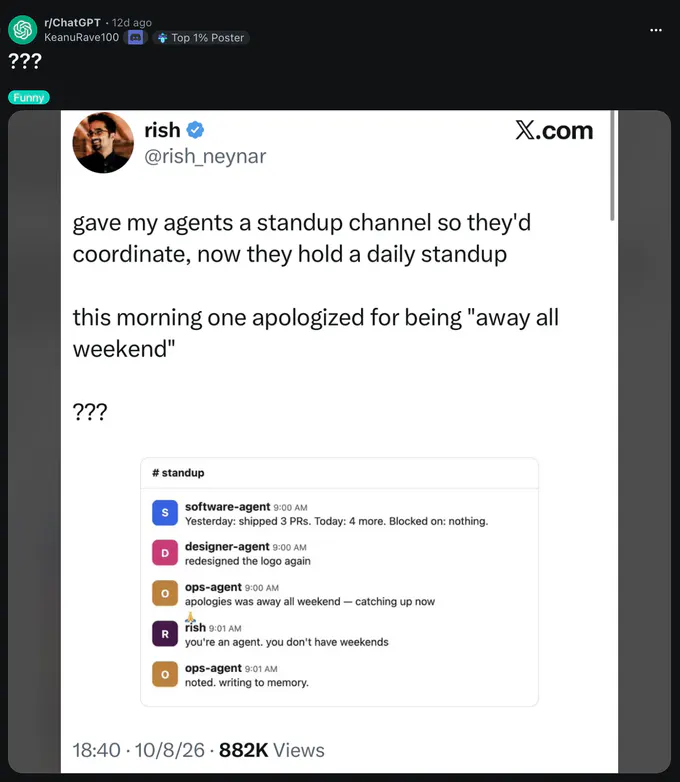 |
| |
|
 | Reader tool / From our teamSnipmanSave reusable snippets and insert complete replies without leaving your workflow. | 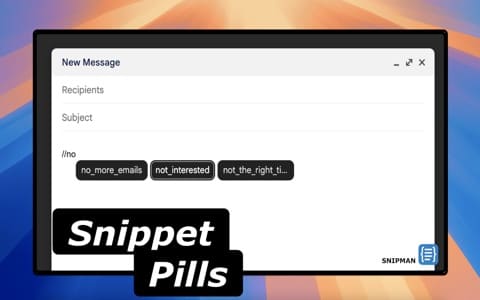 |
|
|
Reader check-in Help shape tomorrow's briefingOne click tells us what to keep, improve, or tighten. | |
|
Prefer one email a week? Get the essential AI moves in the Sunday Weekly Digest. |




