| Daily issue / The Wednesday Workbench | Wednesday, September 23, 2026 |
| | Our toolsSuperpower ChatGPT/WFH.team/Snipman | Today's briefing What matters todayToday, lower model prices meet the practical limits of access: OpenAI’s rollout varies by plan, while Meta’s Muse faces scrutiny over its design and a separate security flaw. Toyota’s factory plans and a larger farmer initiative show how much of the AI story is now about putting systems to work. | Inside today's briefing | | 01 | OpenAI says Sol and Luna cost 50% less than their GPT-5.6 counterparts, although neither was in basic Chat at publication. | | 02 | Meta acknowledges Muse drew heavily on OpenClaw’s design, while a researcher reports a separate flaw that requires local access. | | 03 | Toyota aims for 400,000 factory robots, but has not said how many will be humanoids; workers are training ELEY now. | | 04 | Google and the Gates Foundation raise their AI-tool target to 200 million farmers; the multi-year rollout has yet to show results. |
| 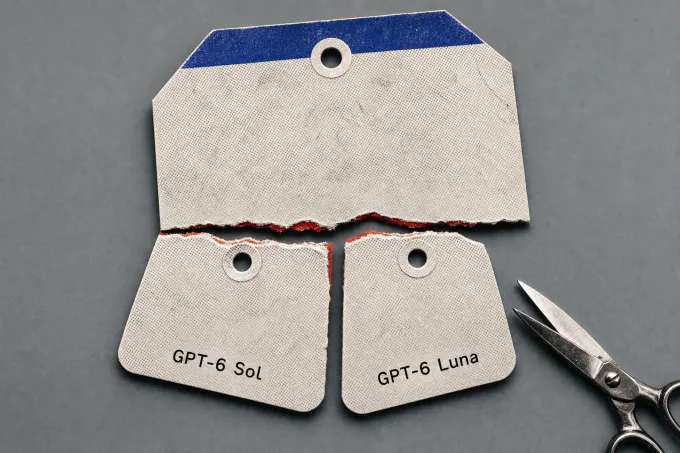 | Lead story / launch OpenAI launches cheaper GPT-6 models, but neither is in basic Chat yetOpenAI has released GPT-6 Sol and GPT-6 Luna as lower-cost, less-intensive alternatives to GPT-6 Astra. The company says they use training methods similar to Astra’s, but positions the pair for work at different scales rather than maximum capability. Both became available September 22 in ChatGPT Work and Codex for Plus, Pro, Business, Enterprise and Edu customers. The API rate card makes the cost difference concrete. Sol costs $2 per million input tokens and $10 per million output tokens; Luna costs $0.10 and $0.50 at the same volumes. OpenAI says both models cost 50% less than their corresponding GPT-5.6 versions. A team’s actual savings will still depend on the work it assigns and the results it gets. OpenAI also says both models make half as many factual errors as their predecessors. It reports that Luna scored 5.4% higher than the GPT-5.6 release on AutomationBench while costing 58% less per task. Those are vendor-reported benchmark and cost results, not a guarantee of the same outcome in a particular deployment. Access is narrower than a general ChatGPT launch. Go and Free users can use Luna in the ChatGPT desktop app, but neither model had reached basic Chat at publication. For teams weighing the new prices, the immediate questions are whether their subscription and product route provide access—and how Sol or Luna performs on their own tasks. Read full story ↗ |
| From chat window to a real PowerPoint file |  | AI assistants are brilliant at the thinking and weak at the last mile. Ask for a deck and you get an outline to paste somewhere, or an HTML page pretending to be slides. Templafy's new connector for ChatGPT, Claude and Copilot closes that gap. The assistant hands the work to Templafy's Document Agent, which builds a native PowerPoint file with real, editable charts, tables and layouts on your company's template. No export, no reformatting. Behind it is Templafy's patented AI compilation for native Office formats. Get started with the Templafy MCP. Add it to ChatGPT, Claude or Copilot |
| 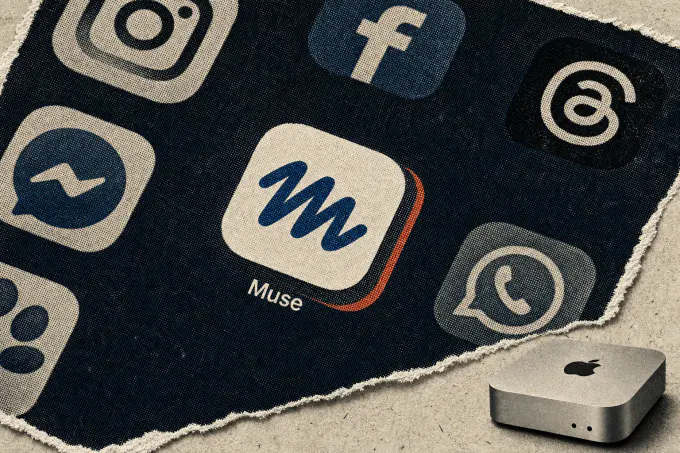 | viral Meta says it built Muse from scratch despite its resemblance to OpenClawMeta acknowledges that OpenClaw heavily inspired its Muse personal agent, while saying the implementation was built from scratch. Users identified matching workspace filenames and nearly identical configuration content, similarities Meta did not dispute. Meta says Muse has a dedicated virtual machine and permission checks intended to make it suitable for broad consumer use; those are the company’s stated safeguards, not a resolution of the design debate. Continue reading ↗ |
|  | A tool for your workflowSuperpower ChatGPTSearch, organize, and export your ChatGPT history without breaking your flow. | | | |
| 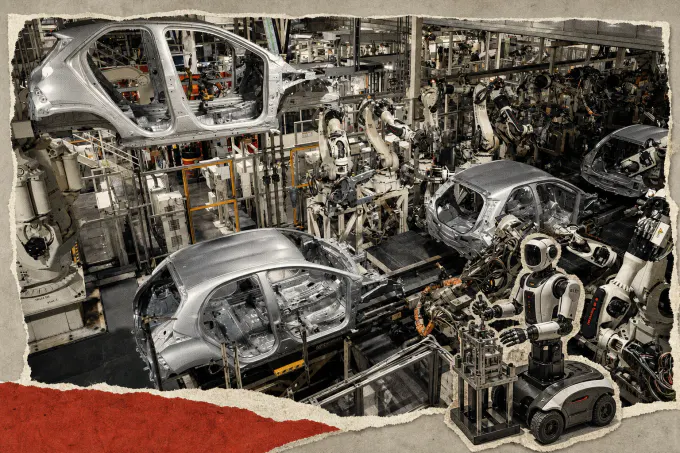 | business Toyota plans 400,000 factory robots, but not all will be humanoidsToyota aims to deploy 150,000 robots at its automotive plants and 250,000 at group-company facilities, with robot upgrades reportedly receiving $6.42 billion annually beginning in 2028. Workers are teaching the wheeled, two-handed ELEY robot precise assembly movements. Toyota says people and robots should coexist, but has not disclosed how many of the planned machines will be humanoids or how many robots it has already deployed. Continue reading ↗ |
|  | partnership Google and the Gates Foundation plan AI tools for 200 million farmersGoogle and the Gates Foundation have raised their target from 50 million to 200 million smallholder farmers across Sub-Saharan Africa and South Asia. They say more than $100 million has been directed toward work that includes farm forecasting, crop research and language datasets, with regional organizations helping deliver it. The multi-year plan establishes funding and intended reach, not demonstrated improvements on farms; adoption and results remain to be seen. Continue reading ↗ |
|
|