In partnership with

SPD-BEEHIIV:6084e8cb-1c6f-4e7f-8844-2e5c95c14627:R22:8c4fbd276aa78d179ff87361NPR interviews show how voters compare candidates—and why a researcher warns that answers may reinforce existing views.
| Daily issue / By the Numbers | Tuesday, October 6, 2026 |
| | Our toolsSuperpower ChatGPT/WFH.team/Snipman | Today's briefing What matters todayToday’s lineup puts AI’s boundaries in focus: voters are researching ballots with chatbots, McDonald’s is disputing price-coordination allegations, and OpenAI is adding text watermarks. Shared agents and AI interviews are reaching users while Google and arXiv restrict submission channels under strain. | Inside today's briefing | | 01 | NPR interviewed voters using chatbots to compare candidates, while a researcher warned that answers can reinforce existing views. | | 02 | OpenAI is adding invisible text watermarks in the EU, but detection is restricted to experts and can weaken sharply after edits. | | 03 | McDonald’s denies allegations of AI-assisted price coordination and says franchisees remain free to reject its recommendations. | | 04 | Google paused new open-source product bug reports, and arXiv now allows two uploads per submitter each month amid moderation strain. |
|  | Lead story / culture Voters turn to ChatGPT for ballot research as a researcher warns of biasNPR’s October 5 interviews document voters using ChatGPT, Gemini and Claude to compare midterm candidates, investigate local races and check viral claims. Some cited shrinking local-news coverage as a reason to look elsewhere for down-ballot information. Pew figures cited in the report say about half of American adults use chatbots, and about 42% of users search for information with them. Those figures measure general use—not how many voters rely on AI for election research. Adam Johnson, a voter in Morgantown, West Virginia, asked ChatGPT to investigate candidates against his political principles. The chatbot said it could research those criteria but should not tell him how to vote. When he asked about immigration, it supplied positions for Sen. Shelley Moore Capito but said Rachel Fetty Anderson had less detailed public material. It declined to assign her generic Democratic positions without evidence. Another interviewee, Lisa Veldran, used Gemini to make a candidate-comparison table. The concern is not only fabricated information. Researcher Rafael Batista warned that a chatbot may select facts that strengthen a user’s existing preference, leaving them more confident without necessarily learning more. He said limited disclosure about commercial models’ training and source selection makes neutrality hard to assess. OpenAI directed NPR to its election safeguards, saying it monitors political bias and designs ChatGPT not to manipulate users. Those are stated safeguards, not proof that every ballot conversation remains neutral. Interviewees described attempts to put checks around the tools. Lakshmi Iyer used Claude to build Ballot Lookup, a volunteer-built Pennsylvania candidate-information site, asking it to select statements from speeches or official websites rather than write its own characterizations. Tyler Black checks one chatbot’s answers against another; Batista said he has not seen evidence that this method is effective. For voters seeking less personalized answers, Batista suggested withholding political preferences from questions and using incognito mode so the chatbot has less prior information about them. Read full story ↗ |
|
|
Your AI prompts are leaving out 80% of what you're thinking.
When you type a prompt, you summarize. When you speak one, you explain. Wispr Flow captures your full reasoning (constraints, edge cases, examples, tone) and turns it into clean, structured text you paste into ChatGPT, Claude, or any AI tool. The difference shows up immediately. More context in, fewer follow-ups out.
Used by teams at Microsoft, Amazon, and Notion. Try Wispr Flow free on Mac, Windows, iPhone, and Android.
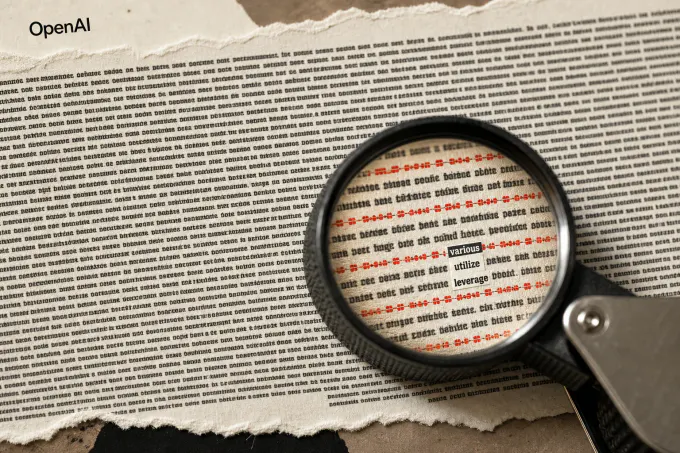 | launch OpenAI starts adding text watermarks in the EU but limits detector accessOpenAI is rolling out invisible text watermarks for eligible ChatGPT and Codex outputs in the EU, with worldwide API opt-in for select models. Detector access is limited to approved researchers and expert organizations. In company tests, replacing 10% of words with synonyms cut detection from about 92% to 66%. A positive result does not establish authorship or accuracy, and a negative one does not prove a human wrote the text. Continue reading ↗ |
|  | A tool for your workflowSuperpower ChatGPT | | Search, organize, and export your ChatGPT history without breaking your flow. | | See features |
|  | lawsuit McDonald’s faces a lawsuit alleging AI-assisted menu price fixingA proposed nationwide class action alleges McDonald’s used AI and nonpublic business data to coordinate prices across franchise and company-owned restaurants. Reuters reported that its pricing system analyzes millions of daily transactions across nearly 14,000 US locations. McDonald’s rejects the allegations and says franchisees can decline its recommendations. The unproven claims challenge whether shared advice can undermine independent pricing, even when software does not set prices. Continue reading ↗ |
| 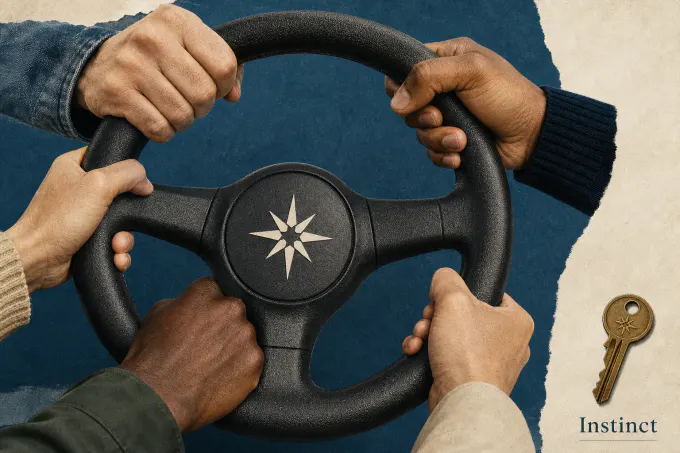 | launch Instinct opens early-access AI group chats to friends without accountsInstinct has opened group chats to early-access users, with friends able to participate without their own accounts. A shared agent works for the group but cannot access participants’ private accounts, according to founder Noah Shinn. Personal agents must ask permission before sharing information or taking action, and pending replies pause when someone new joins. Broader access is promised “soon,” with no date announced. Continue reading ↗ |
|
|
Some teams never seem to stop moving. They're on Attio, the agentic CRM.
It’s your always-on revenue engine: agents and workflows build pipeline, chase every buying signal, and move deals forward alongside your team.
Teams like Parallel, Turbopuffer, and Wordsmith build on Attio. Are you one of them?
| Beyond the feed / Tech Week  | San Francisco / Tue, Oct 6 · 9:30 AM PT |
A named speaker lineup pairs moonshot thinking with product and engineering questions. The expert lounge is a useful complement to the main-stage talks. See the event → Explore the city guide | Daily tool drop 6 AI tools worth knowing today | |
| | | The Internet Had a Point | VPN Suddenly Korean |  |
| |
| Your daily challenge Scout / Challenging / 2–4 min Five letters. Six chances. Follow the clues to find your word. Take the challenge →Explore all games | | AI PULSE / YOUR PERSPECTIVE Which concerns you most about AI regulation? Take part → | Reader check-in Help shape tomorrow's briefingOne click tells us what to keep, improve, or tighten. | |
| Prefer one email a week? Get the Monday briefing, including Friday and weekend news. |
|